In a recent YouTube video, a six-time Olympia champion walked viewers through the exact back session he used to build his title-winning physique.
Spoiler: machines and smart execution take center stage, not ego lifting.
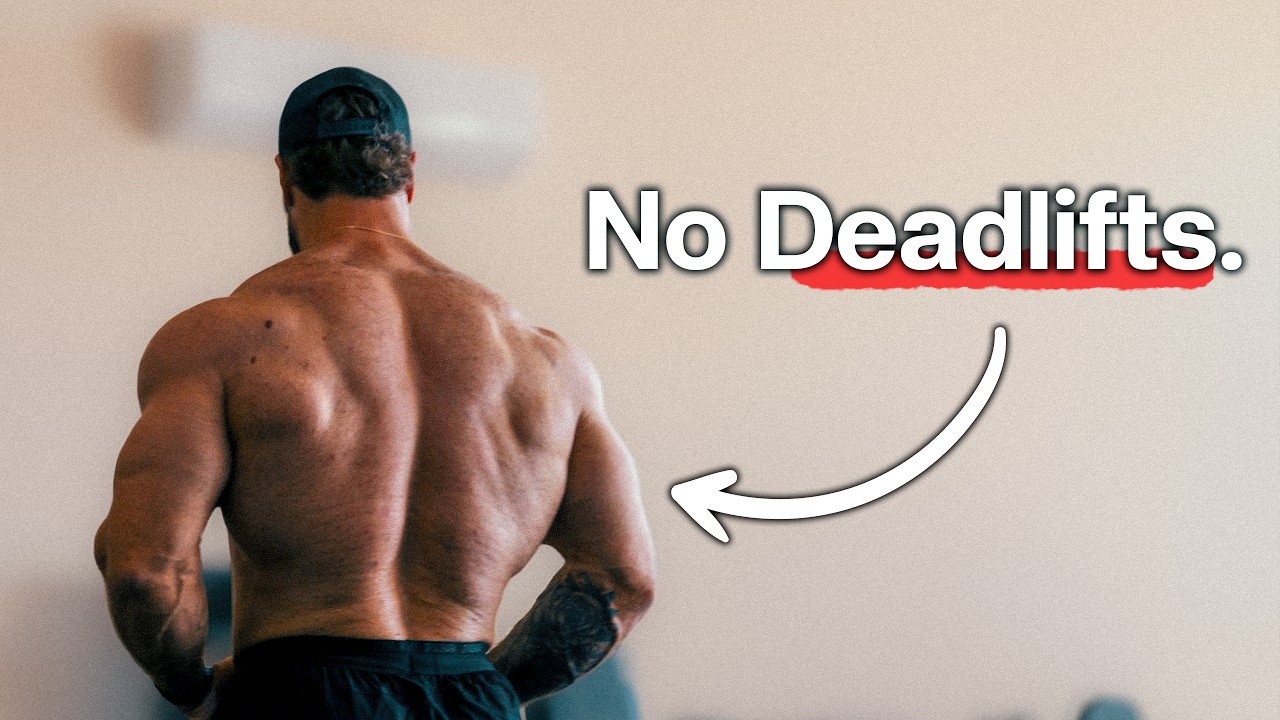
One story about a 405-pound row explains why heavier doesn’t always mean better.
A triple-superset trick forces your weakest angles to finally pull their weight.
Curious how it all fits together?
The Full Back Session at a Glance
Everything here was designed for aesthetics and maximum muscle growth during contest prep.
- Supinated lat pulldown: two working sets, one with a single rest-pause and one with a double
- Triple superset: T-bar row, overhand Hammer Strength-style row, then high row
- Biceps triple superset: reverse-grip EZ-bar curl, hammer curl, preacher curl
- Rear delts: 10 sets of 10 reps
Lat Pulldowns With Rest-Pause
The goal on set one is eight clean reps. Stop, breathe for 10 to 15 seconds, then go right back in for a single rest-pause.
Set two repeats that pattern, adding a second mini-set. Simple, brutal, effective.
The “Back Pocket” Cue
Asked for his best pulldown tip, the champion focused on shoulder blade position, not just pulling the bar down.
You don’t want to over arch your mid back, but when you’re stretching, you want to be in a position where everything is fully extended, your shoulders are completely stretched out, and when you start the movement, you want to start by retracting your shoulder blades so that they’re tucked down to your back pocket.
With practice, this becomes one fluid motion. Shoulder blades wrap and tuck down while lats tighten around them.
Why a Triple Superset Works for Back
Next comes a T-bar row, an overhand machine row, and a high row, each hitting the back from a different angle.
No high-row machine? Set a bench in front of a cable stack or lat pulldown with a slight incline. You’ll get a very similar motion.
Walking between stations doubles as rest. He admits to walking slowly on purpose, much to his training partner’s annoyance.
You’re starting somewhere where you’re arguably the most strongest, where I am on the T-bar row, and your most powerful dominant muscles are going to take over. Therefore, they’re also going to exhaust first.
By the final exercise, those dominant muscles are tired. Weaker muscles must pick up the slack, building strength and size.
That’s his experience-based explanation. Real muscle mechanics are messier than a clean handoff, but the sequencing logic is sound: start with your strongest position, finish with your most challenging.
The 405-Pound Row That Built a Weak Back
Here’s where the story takes a turn. At 19, he barbell-rowed 405 pounds, yet admits his back was lacking.
Which is crazy cuz I can barely deadlift that now. But, my back sucked.
The culprit? A winged scapula and forward-rounded posture. Being very lat-dominant, he rarely retracted his shoulder blades fully, so his mid back never got the work.
The Fix: Lighter Weight, Deeper Range
He dropped the load and kept elbows close to the body. Then he drove them well past his center of gravity.
I was arguably weaker and on video it didn’t look as strong, but I was hitting the muscles that I wanted to.
His takeaway: know your weak point, understand how your body naturally pulls, and build a plan with intention.
Why the Exercise Order Makes Sense
- Pulldowns first: they warmed him up best without exhausting the target muscle
- Rows next: mid-back density was his top growth priority
- Biceps last: they’re the secondary muscle, hit at the end
Biceps Triple Superset: Closing the Gap
Same format, new muscle. He explains that the body likes similar types of stimulus across muscle groups.
Training back, biceps, chest, shoulders, and legs with a consistent style builds capacity everywhere. Think of a strength phase: you wouldn’t do sets of 20 for chest and sets of two for legs.
He has a high bicep insertion, which can make arms look smaller in a T-shirt. His workaround: lots of reverse-grip and hammer work to build the forearm and narrow the visual gap.
- Reverse-grip EZ-bar curl
- Hammer dumbbell curl
- Preacher curl for isolated bicep work
He suggests running a given style for about six weeks, then switching. That rotation helps avoid plateaus.
Rear Delts: 100 Reps to Finish
The finisher is 10 sets of 10. Start moderately heavy without going to failure, then let the final sets get very difficult.
Rear delts are something that a lot of people neglect.
Bodybuilder or not, strong rear delts cap off the shoulder and flow into the tricep. Lateral raises alone won’t deliver that look.
Form First, Ego Last
Asked for the first thing newcomers should focus on, his answer was blunt.
Form is everything. You can train for a long time and get really big very advanced physique by just focusing on form and then building intensity and strength while maintaining that form.
Ego makes fixing form later much harder. Few lifters want to move backward after years of lifting heavy.
Can’t Handle the Volume? Cut Sets
He admits his own work capacity has dipped after roughly a year and a half without training this way. Strength faded mid-session.
You don’t have to be doing what I did when I won Olympia to grow.
His practical advice for anyone overwhelmed:
- Drop a set if fatigue builds too quickly
- Build volume gradually, since work capacity is trainable
- Prioritize range of motion and mind-muscle connection over load
- Treat this as an advanced template, not a day-one requirement
Work capacity matters because the more you can handle and recover from, the bigger you can get. Build it patiently, and the rest follows.