A Canadian bodybuilder just rewrote what’s possible in competitive sports.
Kyle Landi, an Ontario-based athlete with Down syndrome, became the first person with his condition to ever compete for an IFBB Pro League card when he stepped on stage at the 2026 Toronto Pro Supershow qualifier on June 14, 2026.
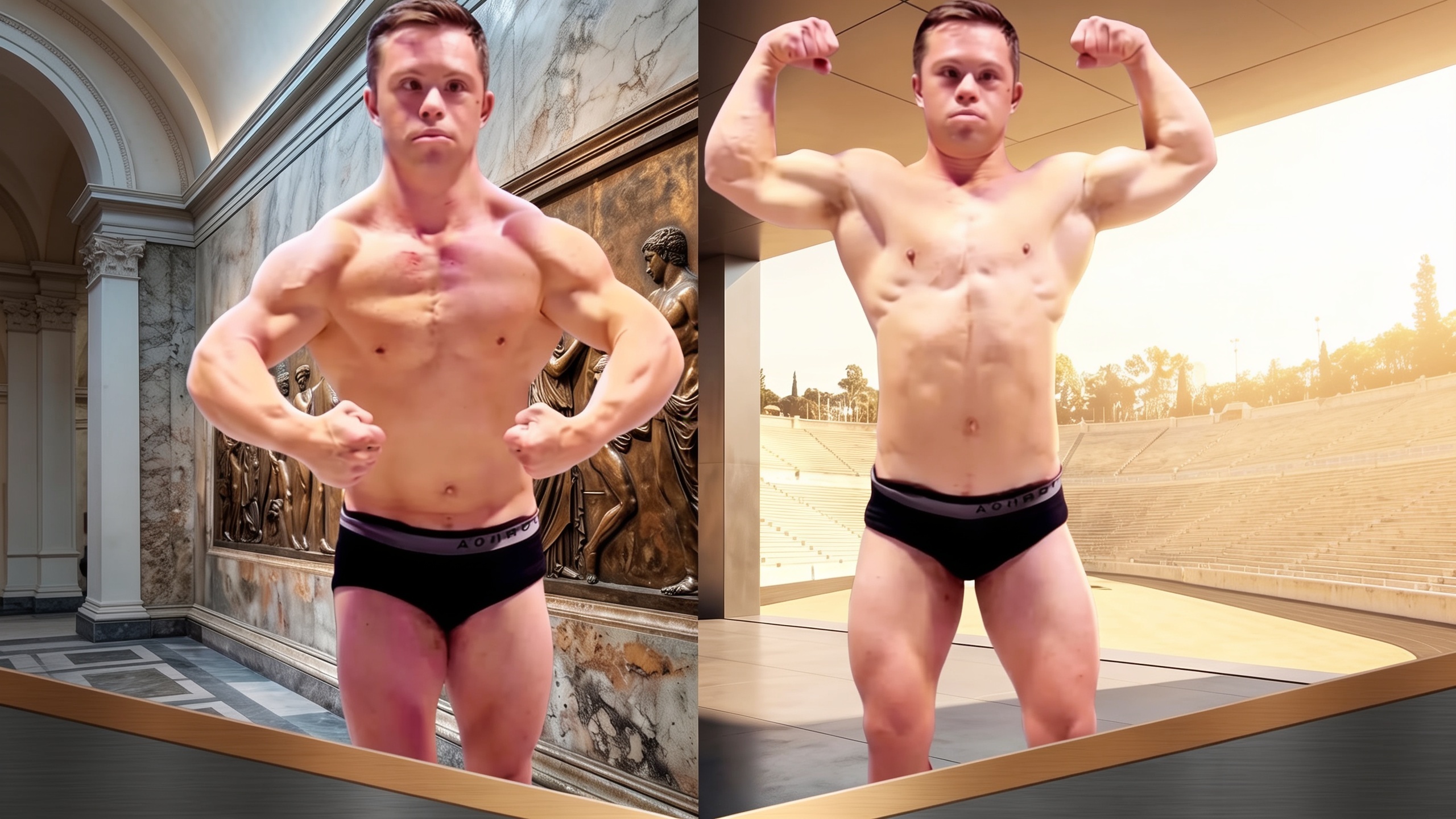
He placed second—missing professional status by just one spot—but his journey to that stage represents something far bigger than any trophy.
And the bodybuilding world is taking notice.
Breaking Barriers at Elite Level Competition
Landi’s appearance at one of bodybuilding’s most prestigious amateur qualifiers wasn’t just symbolic. He competed against top-tier athletes vying for professional status in a sport that demands extraordinary physical discipline, nutritional precision, and mental fortitude.
Down syndrome, medically known as Trisomy 21, results from an extra copy of chromosome 21. The condition brings varying degrees of intellectual disability, distinct physical characteristics, and often cardiac complications that make elite athletic training a significant physiological challenge.

Build Strength and Conditioning With One Simple Tool
FULL-BODY TRAINING
If you want something simple that actually works, this is one of the most effective tools I’ve used to build strength, conditioning, and endurance without needing a full gym setup.
- Full-body training with one weight using swings, squats, and presses
- Solid cast iron build that feels stable and lasts for years
- Comfortable grip that makes high-rep workouts easier to handle
Yet Landi didn’t just participate—he competed.
His runner-up finish demonstrated legitimate high-level amateur bodybuilding ability, proving he belonged on that stage not as a feel-good story, but as a serious competitor who earned his placement through months of grueling preparation.
Road to Toronto: Preparation Meets Recognition
Just three days before competition, Landi shared a physique update on Instagram that generated significant buzz across fitness media. Outlets including Fitness Volt and Generation Iron covered his upcoming appearance, building anticipation for what many recognized as a historic moment.
Toronto Pro Supershow isn’t some small regional event. Held annually in Toronto, Ontario, it’s one of bodybuilding’s premier qualifying competitions, and 2026 offered a record number of pro card opportunities.
Earning an IFBB Pro League card requires winning or placing first at sanctioned amateur qualifiers—a gateway only a tiny fraction of bodybuilders ever pass through. The IFBB Pro League stands as bodybuilding’s premier professional organization worldwide.
Landi’s recognition extends beyond social media buzz. Four-time Mr. Olympia champion Jay Cutler—one of bodybuilding’s biggest legends—previously presented an award to Landi at a Wisconsin event, underscoring his growing presence within the sport’s elite community.
Build Strength and Conditioning With One Simple Tool
FULL-BODY TRAINING
If you want something simple that actually works, this is one of the most effective tools I’ve used to build strength, conditioning, and endurance without needing a full gym setup.
- Full-body training with one weight using swings, squats, and presses
- Solid cast iron build that feels stable and lasts for years
- Comfortable grip that makes high-rep workouts easier to handle
Bodybuilding at competitive levels demands exceptional physiological capacity. Athletes must build significant muscle mass while maintaining extremely low body fat percentages, all while managing recovery, hormonal optimization, and cardiovascular health.
For individuals with Down syndrome, these challenges multiply. Research shows that Trisomy 21 often affects:
- Muscle tone: Hypotonia (decreased muscle tone) is common, making strength gains more difficult
- Cardiovascular function: Approximately half of individuals with Down syndrome have congenital heart conditions
- Hormonal profiles: Thyroid dysfunction occurs at higher rates, affecting metabolism and body composition
- Recovery capacity: Immune system differences can impact training consistency
Landi overcame every single one of these potential obstacles to reach elite amateur status.
His achievement forces a reconsideration of what competitive bodybuilding can look like when determination meets opportunity—and when the sports community opens doors rather than assuming limitations.
Landi’s growing social media presence, particularly his Facebook page under the handle greenrangerkyle, identifies him as Canada’s first bodybuilder with Down syndrome to compete. His story resonates far beyond fitness circles.
A Reddit post on r/canada discussing his Toronto Pro appearance garnered 203 upvotes, with the top comment calling him “an inspiration”—a sentiment echoed across platforms and comment sections.
Build Strength and Conditioning With One Simple Tool
FULL-BODY TRAINING
If you want something simple that actually works, this is one of the most effective tools I’ve used to build strength, conditioning, and endurance without needing a full gym setup.
- Full-body training with one weight using swings, squats, and presses
- Solid cast iron build that feels stable and lasts for years
- Comfortable grip that makes high-rep workouts easier to handle
This widespread admiration reflects something deeper than typical athlete recognition. Landi represents tangible proof that conditions once seen as disqualifying from elite athletics are actually just different starting points requiring adapted approaches.
What Second Place Really Means
Missing the pro card by one placement stings for any competitor. But context matters enormously here.
Landi didn’t earn a sympathy placement or special consideration scoring. He competed under identical judging criteria as every athlete on that stage, evaluated purely on muscularity, conditioning, symmetry, and presentation—bodybuilding’s core standards.
His second-place finish means judges assessed his physique as objectively superior to everyone except the winner. That’s not inspiration porn—that’s legitimate competitive achievement.
More importantly, second place means he’s knocking on the door. With continued refinement and another competition opportunity, an IFBB Pro card remains within realistic reach.
Broader Implications for Inclusive Athletics
Disability rights advocates increasingly point to stories like Landi’s as evidence that mainstream competitive sports can and should expand access for athletes with intellectual and physical disabilities.
Build Strength and Conditioning With One Simple Tool
FULL-BODY TRAINING
If you want something simple that actually works, this is one of the most effective tools I’ve used to build strength, conditioning, and endurance without needing a full gym setup.
- Full-body training with one weight using swings, squats, and presses
- Solid cast iron build that feels stable and lasts for years
- Comfortable grip that makes high-rep workouts easier to handle
Traditional Paralympic systems create separate competition lanes. While valuable, they don’t challenge assumptions about who can compete in mainstream events at high levels.
Landi’s pathway demonstrates an alternative model: adaptive preparation meeting existing competitive standards. He didn’t require rule changes or modified divisions—he simply needed opportunity, proper training, and belief in his capacity.
Canada’s disability sports landscape may see ripple effects from this breakthrough. National programs tracking representation of athletes with disabilities now have a case study showing competitive viability at elite amateur levels in traditionally non-adaptive sports.
What Comes Next
Landi’s immediate future likely involves continued competition at IFBB-sanctioned qualifiers. Each appearance builds his resume, refines his presentation, and increases his chances of securing that elusive first-place finish.
Beyond personal achievement, his visibility creates pathways for other athletes with Down syndrome and related conditions who previously saw bodybuilding—and countless other sports—as closed doors.
Sports medicine researchers studying Down syndrome and athletic participation now have compelling reason to investigate optimal training protocols, nutritional strategies, and recovery modalities specific to this population at competitive levels.
Build Strength and Conditioning With One Simple Tool
FULL-BODY TRAINING
If you want something simple that actually works, this is one of the most effective tools I’ve used to build strength, conditioning, and endurance without needing a full gym setup.
- Full-body training with one weight using swings, squats, and presses
- Solid cast iron build that feels stable and lasts for years
- Comfortable grip that makes high-rep workouts easier to handle
Coaches and trainers working with clients who have intellectual disabilities gain proof that elite-level goals aren’t automatically off-limits—they just require informed, adapted approaches and refusal to accept traditional limitations as inevitable.
Redefining “Possible” One Competition at a Time
Kyle Landi didn’t win his pro card on June 14, 2026. But he accomplished something arguably more significant: he permanently changed perceptions about what athletes with Down syndrome can achieve in elite competitive sports.
His second-place finish at Toronto Pro wasn’t the end of his story—it was validation that he belongs at this level, competing against anyone who steps on stage.
Every rep he completes, every meal he preps, every posing session he perfects sends a message to young athletes with disabilities: your condition is part of your story, not the limit of it.
And when Landi inevitably steps on another stage, chasing that pro card with the same determination that got him to Toronto, the bodybuilding community—and the world watching—will be cheering for an athlete who’s already won something bigger than any trophy.
https://www.facebook.com/share/1CsuneD6cL/?mibextid=wwXIfr