Building 20 pounds of muscle transforms physiques completely, regardless of starting point.
Yet less than 5% of people ever achieve this naturally—not because of age or genetics, but because they lack the right approach.
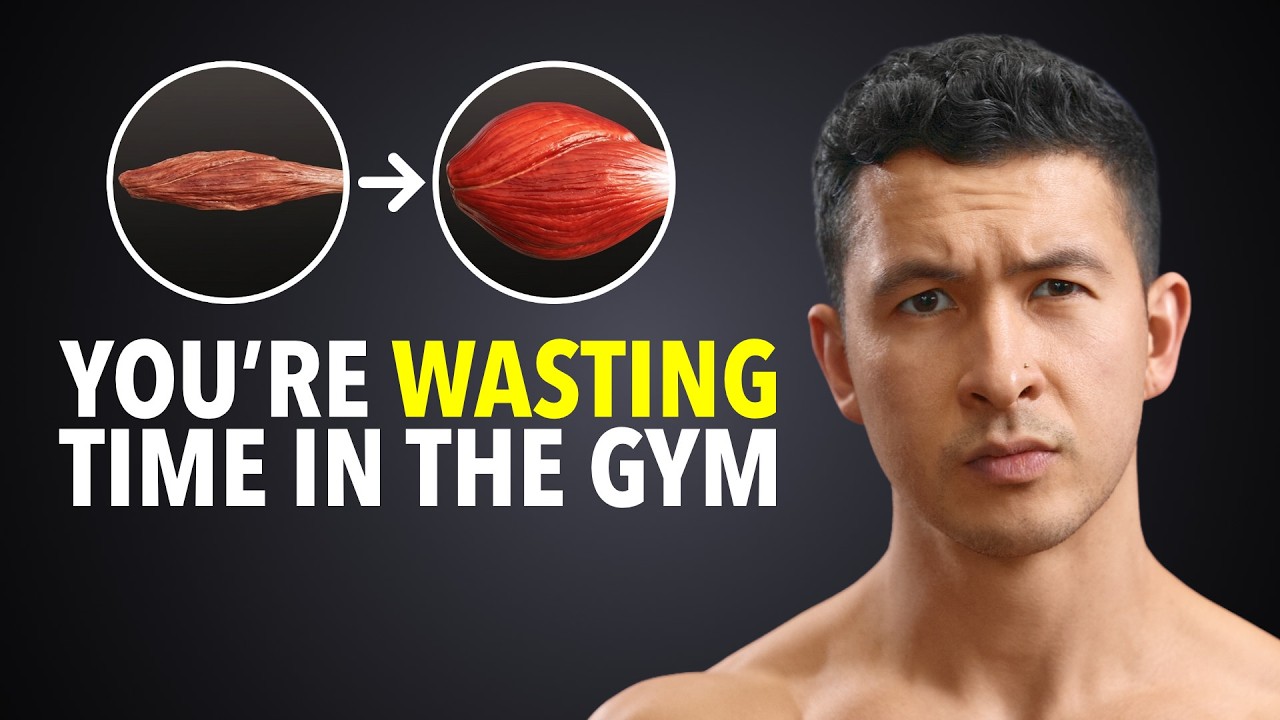
Popular fitness expert Jeremy Ethier recently teamed up with five leading scientists and coaches to answer one critical question: what’s the fastest way to gain 20 pounds of muscle naturally?
Their findings challenge nearly everything mainstream fitness promotes about training volume, intensity, and nutrition.
The Timeline Nobody Talks About
Before diving into methods, Ethier addresses what few fitness influencers admit: realistic timelines.
With proper training and nutrition, gaining 20 pounds of muscle takes at least one full year. Each subsequent year, gains slow by roughly half.
The encouraging news? Your fastest gains don’t come when you start lifting—they come when you start lifting properly.
What Elite Natural Bodybuilders Actually Do
Researchers recently studied training routines of 56 top natural bodybuilders—athletes who built well over 20 pounds of muscle without pharmaceutical assistance.
The findings surprised many: these elite athletes averaged just 12 sets per muscle group weekly. Some muscle groups received only six weekly sets.
Dr. Mike Zourdos, professor at Florida Atlantic University’s muscle growth lab, explains why more isn’t always better.
From sets 1 to five, you’re getting a lot of growth. From 5 to 10, you’re getting some. And then every time you add sets after that, we’re not as confident that you’re still getting more growth.
Intensity Matters More Than Volume
Dr. Zourdos’s team discovered something more impactful than set count: proximity to failure.
When lifters stopped sets eight reps short of failure—where most gym-goers typically train—muscles still grew. But pushing sets to just one or two reps from failure nearly doubled growth rates.
Ethier identifies two simple tests most lifters fail:
- If your last rep isn’t moving extremely slowly, you’re not pushing hard enough
- If you can perform more reps on your final set than your first (using identical weight), intensity is insufficient
Two Proven Training Approaches
Rather than maximizing everything simultaneously, optimal muscle building requires choosing between two sustainable approaches.
The Intensity Method
This approach involves 5-12 sets per muscle weekly, with every single set taken to complete failure.
A complete chest workout might include just three sets of bench press, three sets of incline, and two sets of cable flies—totaling eight weekly sets completed in roughly 20 minutes.
Total weekly gym time: 3-4 hours.
The catch? Every set demands maximum mental effort—muscles shaking, face flushed, pushing until another inch of movement becomes physically impossible.
The Volume Method
This alternative involves 12-20 sets per muscle weekly, stopping two to three reps before failure.
That same chest workout expands to four sets each of bench press, dips, incline press, and cable flies. Individual sets feel easier, but workouts run longer.
Which approach wins? According to the experts, the difference is minimal.
Whatever somebody is going to enjoy and adhere to the most, they should do that.
Ethier personally combines both methods—using intensity for arms and back, but preferring additional volume for legs where training to failure becomes brutally taxing.
The Session Volume Ceiling
Recent research by Jake Reimer identified a critical threshold: 10-11 sets per muscle per session.
Beyond this point, additional sets within a single workout produce questionable returns due to accumulated fatigue.
The solution? Split your weekly volume across at least two training sessions per muscle group. This simple adjustment can accelerate gains by approximately 30%.
Upper-lower splits, push-pull-leg routines, and full-body programs all accomplish this effectively.
Three Stages of Exercise Selection
Steve Hall, a drug-tested natural bodybuilder who gained 45 pounds of muscle over 20 years, explains how exercise selection evolves.
Stage One: Master Basic Patterns
Beginners should focus on just six foundational movements performed three times weekly: a press, a pull, a squat, a hip hinge, plus arm and shoulder work.
This streamlined approach can produce over 10 pounds of muscle.
Stage Two: Identify Individual Responders
After 2-3 consistent training years, compound movements reveal limitations. Your body prioritizes moving weight efficiently—not necessarily building balanced muscle.
You’ve probably really grown some of your strong, genetically well-endowed muscle groups cuz your body just wants to move the weight A to B the most efficient way possible.
Ethier’s quads barely responded to squats but exploded with hack squats. His chest ignored bench press but grew rapidly from machine and cable work.
Become your own laboratory. Test exercises paying close attention to joint comfort, muscle pump, and next-day soreness—these indicators reveal your optimal movements.
Stage Three: Double Down on Winners
Once you’ve identified which exercises actually grow your muscles best, stop constantly switching movements.
Hall shared his personal staples for each muscle group:
- Delts: Cross-body cable lateral raises
- Triceps: Dumbbell skull crushers
- Biceps: Preacher curls
- Chest: Converging machine press
- Lats: Shoulder-width lat pulldowns
- Quads: Cybex hack squat
- Hamstrings: Romanian deadlifts
- Calves: Straight-leg calf raises
Nutrition: Matching Calories to Growth Potential
While training drives muscle growth, nutrition provides essential fuel. The critical question: how much should you actually eat?
For Higher Body Fat (Above 20% Men, 30% Women)
Dr. Eric Helms, muscle growth scientist and pro natural bodybuilder, explains a counterintuitive advantage.
There’s about five times the energy in fat tissue compared to lean tissue. And if your body believes it needs to build muscle cuz you’re giving it a resistance training stimulus, some body fat may be metabolized to feed that.
Aim for body recomposition—simultaneously losing fat while building muscle. Maintain a modest deficit losing 0.5% of body weight weekly (roughly 250-500 calories below maintenance).
You might achieve 70-80% of maximum possible muscle gains while appreciably reducing body fat—a worthwhile trade visually.
For Leaner Individuals
Once you drop below those body fat thresholds and muscle maximization becomes primary, calories directly accelerate growth.
Scale your surplus based on training experience:
- Beginners: Gain 2% body weight monthly
- Intermediates: Gain 1% body weight monthly
- Advanced: Gain 0.5% body weight monthly
One study with untrained males paired hypertrophy training with a 2,000-calorie daily surplus. Results? Nearly one pound of lean mass gained weekly over eight weeks—exceptional growth compressed into just two months.
The Truth About Protein
Despite protein appearing in virtually every food product nowadays, its impact on muscle growth surprises most people.
Protein overall has a very small effect.
While protein supports muscle growth, it plays a smaller role than commonly believed. The minimum threshold for maximum benefit? 1.6 grams per kilogram of body weight (approximately 0.7 grams per pound).
A 220-pound individual maximizes protein’s muscle-building effects consuming just 120 grams daily—far less than many fitness protocols recommend.
Even at 1.2 grams per kilogram—”hard to not hit” according to researchers—significant muscle growth still occurs.
Pre-Workout Nutrition: The Overlooked Game-Changer
The biggest nutrition mistake isn’t inadequate protein—it’s poor pre-workout fueling.
Ethier’s proven protocol:
- 1.5-2 hours before training: Meal combining slow-digesting carbs and protein (oats with Greek yogurt and protein powder)
- 30 minutes before training: Fast-digesting carbohydrates for immediate energy
This combination provides sustained energy enabling hours of high-intensity training.
Supplements: What Actually Works
Dr. Eric Trexler from Duke University has published research on virtually every supplement imaginable.
His top recommendation? Creatine—cost-effective with consistently positive effects on muscle growth, potentially adding 2-3 pounds of lean mass in the first 8-12 weeks.
Two important caveats exist. First, most of that initial gain represents water pulled into muscles for fullness—not continuous muscle tissue accrual every 8-12 weeks.
Second, roughly 20-30% of individuals don’t respond to creatine supplementation.
How to identify if it’s working? If you typically achieve 10 reps at a given weight, creatine should enable 2-3 additional reps (a 20-30% increase) shortly after beginning supplementation.
Beyond creatine, no supplements are truly necessary for building 20+ pounds of muscle—even prisoners in suboptimal conditions with limited protein build substantial muscle given adequate training stimulus.
Sleep: The Non-Negotiable Recovery Factor
Dr. Andrew Spector, board-certified neurologist and sleep specialist at Duke University, calls sleep essential for muscle development.
The body actually produces more growth hormone and testosterone when you slept better. So if you want to build muscle, you have to get the sleep.
Beyond duration, quality matters immensely. If seven hours leaves you unrefreshed, something compromises your sleep quality.
Three Sleep Quality Destroyers
Excessive ambient light: LED indicators from chargers and smoke detectors compromise darkness. True darkness means you cannot see your hand before your face.
Environmental noise: Even subtle sounds disrupt sleep architecture.
Solution: Eye masks and earplugs—costing roughly $15 on Amazon—can transform seven hours in bed into genuinely restorative eight or nine hours.
Elevated temperature: Bodies require coolness for quality sleep. Program thermostats to drop throughout the night, reaching coldest temperatures between 2-4 AM when sleep maintenance becomes critical.
The Strategic Nap
When inadequate nighttime sleep occurs, strategic napping prevents performance sabotage.
Research on sleep-deprived sprinters (restricted to four hours) showed just 20 minutes of napping dramatically improved performance. Without naps, sprint speed decreased several percentage points—margins separating first from eighth place at elite levels.
Consistency Beats Perfection
Nothing covered represents magic—training protocols, nutrition guidelines, and recovery strategies simply work across demographics when applied consistently.
The genuine challenge isn’t understanding what to do. It’s executing week after week, month after month, until 20 pounds of muscle becomes inevitable rather than aspirational.
For beginners following these evidence-based principles, expect 3-8 pounds of muscle over six months. With sustained adherence across 12-18 months, that transformative 20-pound milestone becomes entirely achievable—naturally.