How He Tests Athleticism After Bodybuilding
Chris Bumstead, better known as CBum, is one of the most dominant athletes in the history of classic physique bodybuilding. As a multi-time Mr. Olympia champion, his training was once centered entirely around hypertrophy, symmetry, and peaking for the stage. However, after retiring from competitive bodybuilding, Bumstead has shifted his focus toward a new goal: testing real athleticism.
Rather than chasing muscle size alone, Chris Bumstead’s post-bodybuilding workout prioritizes strength, mobility, power, speed, and overall performance. This evolution in training provides valuable insight into how elite bodybuilders adapt their workouts once aesthetics are no longer the primary objective.
Below our team at Generation Iron is going to provide a breakdown of Chris Bumstead’s athleticism test workout, why each movement was selected, and what it reveals about functional fitness after bodybuilding.
Why Chris Bumstead Changed His Training After Retirement
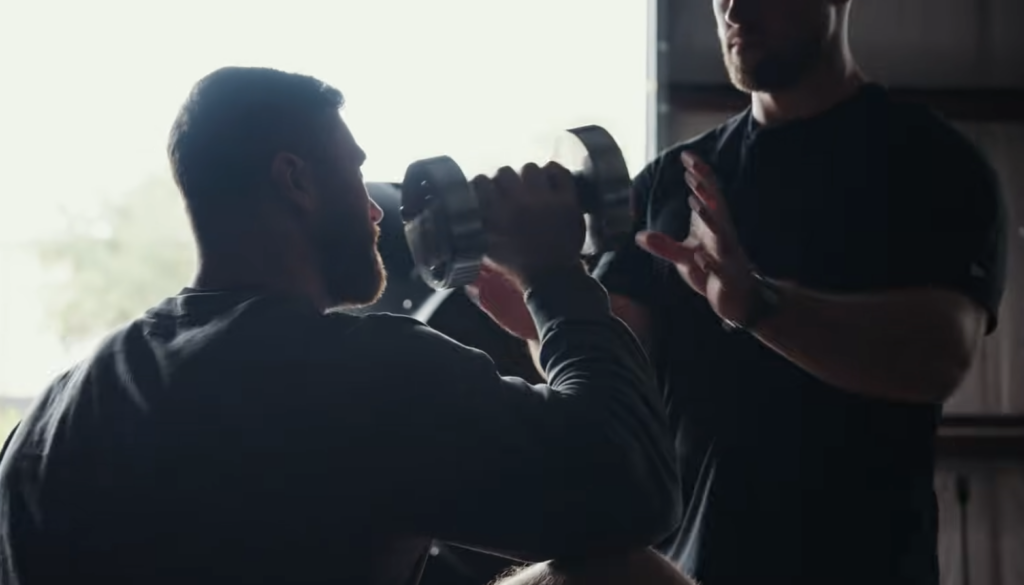
No, Chris Bumstead is not trading in the dumbbells forever, he still focuses on muscle mass and strength. Bodybuilding training is highly specialized. It emphasizes controlled movements, isolation exercises, time under tension, and muscular fatigue. Athletic training, on the other hand, focuses on how the body moves as a unit.
After retiring from bodybuilding, Chris Bumstead’s goals shifted to being the healthiest version of himself, allowing him to focus on:
- Preserving strength without excessive joint stress
- Improving mobility and movement quality
- Rebuilding explosive power
- Testing conditioning and speed
- Maintaining muscle while improving longevity
This workout is not about looking strong—it’s about being strong, fast, and capable.
Warm-Up With a Trainer and Assisted Stretching
The session begins with a structured warm-up and hands-on stretching with a trainer.
Purpose of the Warm-Up
- Increase blood flow and tissue temperature
- Improve joint range of motion
- Activate stabilizing muscles
- Reduce injury risk
Years of heavy bodybuilding training can lead to tight hips, shoulders, and thoracic spine restrictions. Assisted stretching helps counteract that stiffness and prepares the body for both heavy lifting and explosive movements later in the workout.
Bench Press: Measuring Upper-Body Strength
Despite the shift toward athletic performance, the bench press remains an important benchmark in Chris Bumstead’s workout.
Why Bench Press Still Matters
- Tests raw upper-body pressing strength
- Assesses shoulder and triceps durability
- Provides a clear comparison to past strength levels
Unlike bodybuilding-style benching focused on volume and muscle fatigue, this variation is used as a pure strength assessment, helping determine how well Bumstead retains functional pressing power after retiring.
Weighted Chin-Ups: Strength-to-Bodyweight Performance
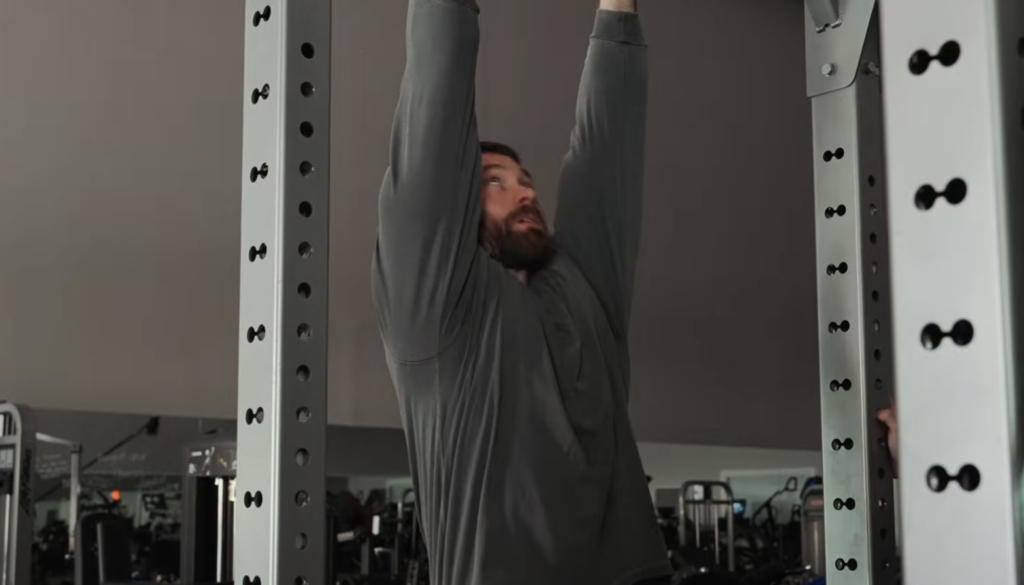
Weighted chin-ups are one of the most telling athletic movements in the workout.
Benefits of Weighted Chin-Ups
- Measure relative strength rather than absolute load
- Challenge grip strength, lats, biceps, and core
- Improve scapular control and shoulder health
For an athlete with significant muscle mass, chin-ups reveal whether that size translates into usable strength. This exercise highlights functional pulling power, not just back aesthetics.
Dumbbell Shoulder Rotations: Rotator Cuff Health and Stability
Shoulder longevity becomes increasingly important after years of intense training. Dumbbell shoulder rotations are included to reinforce joint integrity.
Why Shoulder Rotations Are Critical
- Strengthen the rotator cuff
- Improve shoulder stability under load
- Reduce injury risk during pressing and throwing movements
This exercise helps balance years of pressing and isolation work common in bodybuilding routines.
Chest-Supported Single-Arm Dumbbell Front Raises
This controlled movement introduces unilateral training and anti-momentum control.
Benefits of This Exercise
- Improves shoulder flexion strength
- Enhances scapular stability
- Addresses left-to-right imbalances
- Removes lower-back compensation
Chest support forces strict execution, making this an effective way to test shoulder control rather than brute strength.
Jumps: Testing Lower-Body Explosiveness
Jump training is a clear departure from traditional bodybuilding exercises.
Why Jumps Are Included
- Measure explosive lower-body power
- Improve fast-twitch muscle recruitment
- Reinforce proper landing mechanics
For someone who spent years training slowly under heavy load, the ability to jump efficiently demonstrates retained athletic capability and neuromuscular coordination.
Medicine Ball Throws Behind the Head
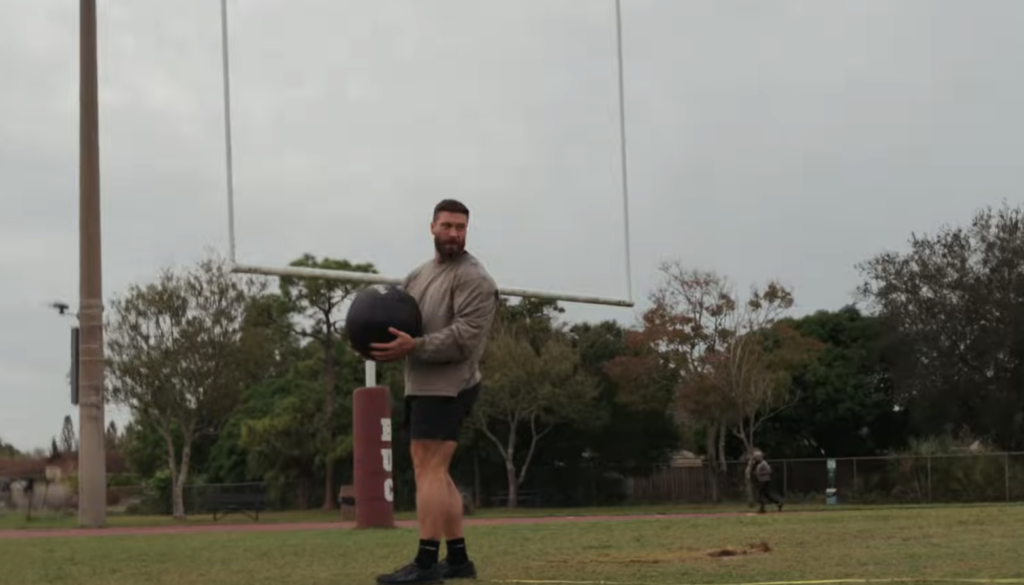
Behind-the-head medicine ball throws assess full-body power output.
Purpose of Medicine Ball Throws
- Train triple extension (hips, knees, ankles)
- Improve force transfer from lower to upper body
- Mimic athletic movements like sprinting and throwing
This exercise tests how well Bumstead can generate power quickly—something rarely emphasized during bodybuilding competition prep.
Sprints: Speed, Conditioning, and Athletic Readiness
The workout concludes with sprints, one of the most demanding athletic tests.
Why Sprinting Is Essential
- Measures speed and acceleration
- Tests cardiovascular conditioning
- Challenges coordination, posture, and leg drive
Sprinting places high demands on the nervous system and connective tissues, making it an excellent indicator of real-world athletic performance.
What Chris Bumstead’s Athleticism Workout Reveals
This workout shows that elite bodybuilding does not eliminate athletic potential. With proper training adjustments, former bodybuilders can reclaim speed, power, and mobility while maintaining strength.
Key Takeaways
- Athleticism requires movement quality, not just muscle size
- Relative strength is more important than maximal load
- Explosive and sprint-based training rebuilds performance
- Mobility and joint health become top priorities post-retirement
Final Thoughts: Training Beyond the Bodybuilding Stage
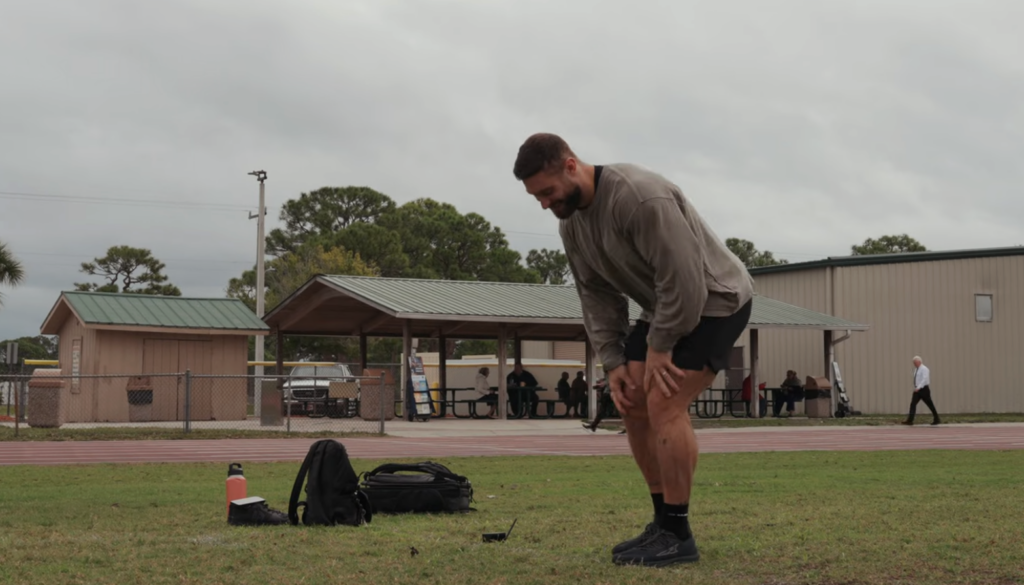
Chris Bumstead’s post-retirement workout offers a blueprint for transitioning from bodybuilding to performance-focused fitness. It blends strength, mobility, and explosive athletic movements to test what truly matters once competition ends.
For retired bodybuilders, strength athletes, or fitness enthusiasts seeking longevity, this approach proves that a powerful, athletic body is built through balance—not just muscle mass.
Let us know what you think in the comments below. Also, be sure to follow Generation Iron on Facebook, Twitter, and Instagram.