In a recent YouTube video, a women’s bodybuilding creator walked viewers through a complete offseason back day, one exercise at a time.
Every movement came with a small cue that changes how the rep feels.
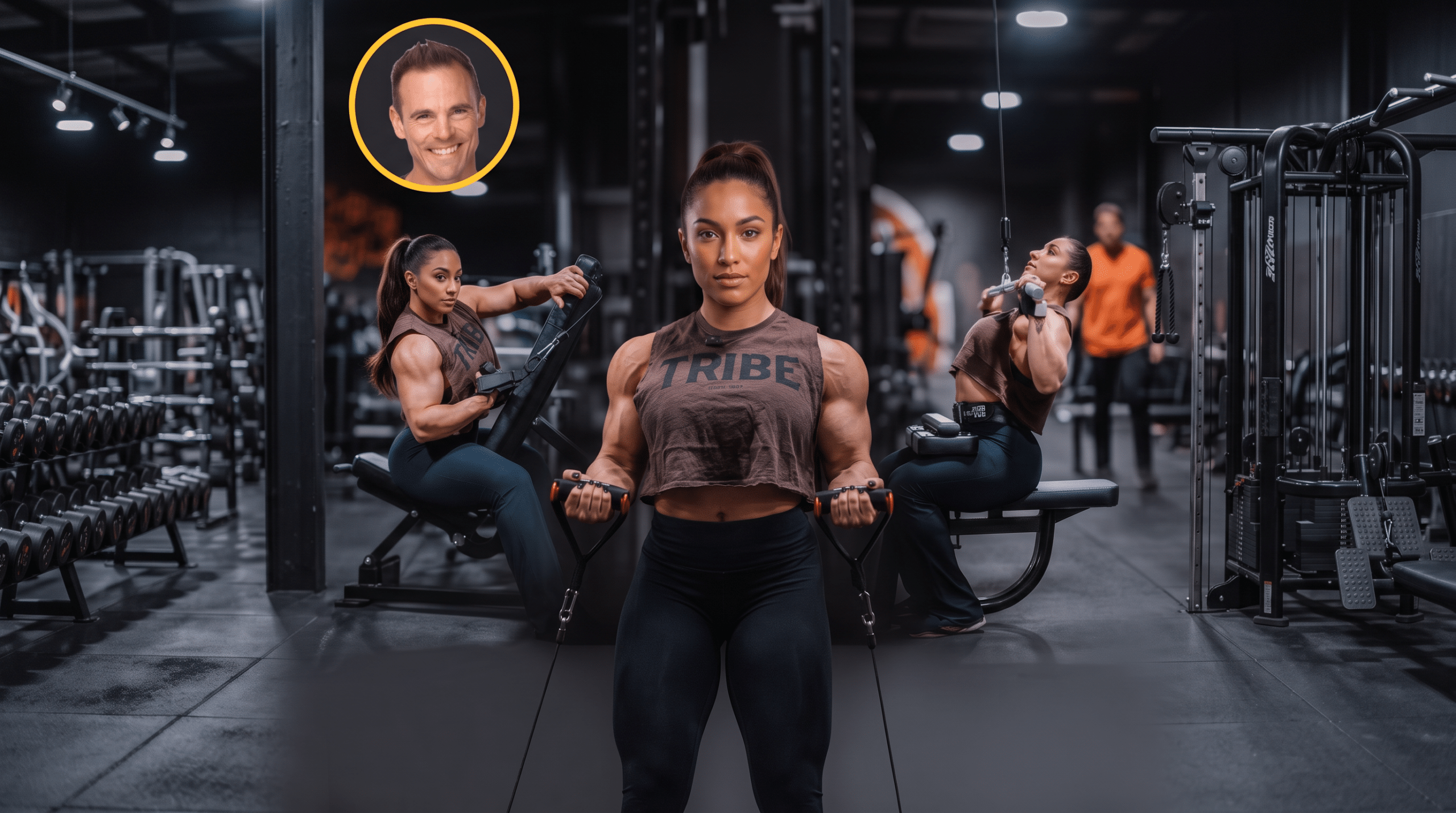
Straps, belts, and a quirky “wellness pose” trick all made the cut.
Why does she lift her chest on literally every rep?
Keep reading to find out, plus how to borrow each tip for your next pull session.
Straps Protect Your Back’s Workload
Grip often fails before lats do. Her fix is simple: straps go on for every rowing movement.

Build Strength and Conditioning With One Simple Tool
FULL-BODY TRAINING
If you want something simple that actually works, this is one of the most effective tools I’ve used to build strength, conditioning, and endurance without needing a full gym setup.
- Full-body training with one weight using swings, squats, and presses
- Solid cast iron build that feels stable and lasts for years
- Comfortable grip that makes high-rep workouts easier to handle
I want to make sure that my back is taking most of the work.
Multiple sets in a row make forearm fatigue even more likely, so straps keep the target muscle in charge.
Lat Pulldown: Build the Base Before Pulling
Lock In Your Lower Half
Pulling power starts below the waist. She sets the thigh pad snugly, plants feet flat, then presses upward into the pad.
That counterbalance drives her butt into the seat, so only the torso moves.
The last thing you want is to let that weight yank you up in between reps.
Stretch, Then Set the Shoulder Blades
At the top, arms reach fully overhead. Shoulders rotate inward, similar to her pull-up, creating a deep lat stretch.
Shoulder rotation reverses first. She then retracts her scapulas, picturing rear delts pointing toward the floor.
Bring the Chest to the Bar
Once locked in, elbows bend. Her mental image: chest rises to meet the bar.
Build Strength and Conditioning With One Simple Tool
FULL-BODY TRAINING
If you want something simple that actually works, this is one of the most effective tools I’ve used to build strength, conditioning, and endurance without needing a full gym setup.
- Full-body training with one weight using swings, squats, and presses
- Solid cast iron build that feels stable and lasts for years
- Comfortable grip that makes high-rep workouts easier to handle
A lot of people want to bring those shoulders into an internal rotation, and that’s what I see a lot is they’re rotating their elbow shoulders forward, and they’re letting their chest collapse and they’re pulling down.
Her counter-cue is to overemphasize a lifted chest, drive elbows behind the body, and guide the bar straight to the sternum.
A belt also joins the party. It reminds her to brace, and helps her find the line between a controlled arch and a loose one.
Cable Row Variations With Torque D-Handles
Next came what she calls an “absolute game changer”: D-handles from Torque.
This puts that weight balanced evenly between the wrist and the hand so it works like a wrist strap but also you’ve got that grip.
She alternates between two iliac-style rows:
- High row: pulling down toward the hip
- Lateral row: cable at shoulder height, pulling at a 90° angle
Her High Row Setup
- Place an incline bench far enough back to fully extend the lat.
- Brace a forearm on the bench, chest away from the pad.
- Start with palm down, then rotate it inward as the elbow bends.
- Drive from the elbow, not the bicep.
Once the arm passes the torso, she adds slight rotation. A small hip rotation upward finishes the move, which she says digs deep into the lower lat.
Cable Pullover: Press, Don’t Row
Pullovers use a V-bar, palms facing inward. The trap many lifters fall into is turning this into a row.
Build Strength and Conditioning With One Simple Tool
FULL-BODY TRAINING
If you want something simple that actually works, this is one of the most effective tools I’ve used to build strength, conditioning, and endurance without needing a full gym setup.
- Full-body training with one weight using swings, squats, and presses
- Solid cast iron build that feels stable and lasts for years
- Comfortable grip that makes high-rep workouts easier to handle
I’m simply using the grips, but pressing down. So flat palm almost pressing down to the floor and then pulling it into my body.
Her finishing image is quirky but memorable: a wellness pose, hands on thighs, upper chest lifting and arching slightly.
Own the Negative
Anybody can feel lats squeezing on the way down. Fewer lifters control the return.
If you’re just letting that weight go in between you are missing out on 50% of the muscle fatigue you could be getting from this movement.
The “50%” figure is a coaching estimate rather than a measured number. Still, slow, resisted lowering is a well-established way to add challenge to any lift.
Her rule: spend equal time coming out of the contraction as going into it.
I like to say resist gravity when you’re in the negative of really any movement and you will get so much more out of that movement.
Reverse Peck Deck: Small Muscle, Small Range
Rear delts are tiny. Chasing a huge range of motion usually backfires.
You don’t need to get your arms all the way behind you. I come just shy of lateral.
Her checklist for cleaner reps:
Build Strength and Conditioning With One Simple Tool
FULL-BODY TRAINING
If you want something simple that actually works, this is one of the most effective tools I’ve used to build strength, conditioning, and endurance without needing a full gym setup.
- Full-body training with one weight using swings, squats, and presses
- Solid cast iron build that feels stable and lasts for years
- Comfortable grip that makes high-rep workouts easier to handle
- Stop with hands still in front of the body
- Keep shoulders from rolling forward to cheat range
- Face the inside of the elbows straight ahead
- Press through the outside of the hand, thinking pinky
- Punch outward, staying wide rather than squeezing shoulders together
Three Biceps Flavors for Complete Arms
Her typical menu includes a hammer curl, a force-stretch curl, and a traditional curl.
Cable Drag-Style Curl
Arms fall behind the torso, and tension never leaves. Instead of fixing the elbow, she keeps it behind her for a deeper stretch and a harder squeeze.
Incline Curl Details
She prefers cables over dumbbells here, since cables keep constant pull. Legs extend slightly forward so body weight can’t swing the load.
I never let them go fully limp and break at the bottom.
Wrists stay curled toward the forearm for the full set, which she feels keeps the work in the bicep.
Single-Arm Dumbbell Preacher Curl
Her favorite setup perk: the bench pad lines up right under the armpit. No guessing at seat height.
Keeps my wrist aligned, my elbow aligned. Tells me how I need to turn myself forward to keep all of this in line like joints over joints.
Because anatomy tends to pull the dumbbell inward, she overrotates outward to keep stress on the bicep. The cue to finish: pull wrist to front delt.
Build Strength and Conditioning With One Simple Tool
FULL-BODY TRAINING
If you want something simple that actually works, this is one of the most effective tools I’ve used to build strength, conditioning, and endurance without needing a full gym setup.
- Full-body training with one weight using swings, squats, and presses
- Solid cast iron build that feels stable and lasts for years
- Comfortable grip that makes high-rep workouts easier to handle
Quick Takeaways to Try Next Back Day
- Use straps on rows so grip doesn’t end your set early.
- Plant hips and feet to stop the weight from yanking you up.
- Keep your chest lifted on pulls, rear delt work, and curls.
- Lead with elbows, not hands or biceps.
- Control every negative instead of dropping the weight.
- Shorten rear delt range to protect shoulder position.
- Align joints on preacher curls for steady tension.
This was day one of a two-part back split, with more full breakdowns promised. Pick one cue, test it next session, and notice what changes.