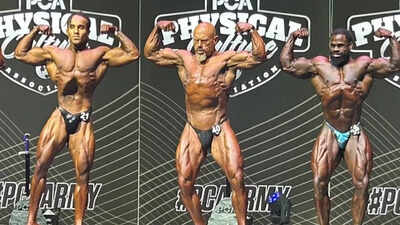
Bodybuilding is meant to build strength, but the sport is facing serious questions over athlete deaths, steroid use and the pressure to achieve the perfect physique. A study published in the European Heart Journal recorded 121 deaths among 20,286 male bodybuilders, with 46 linked to sudden cardiac deaths. The concerns have grown following the death of 33-year-old Mateusz Chmura, who collapsed during a bodybuilding competition in October. While thousands continue to compete for personal goals, experts are warning that the health risks need far more attention.
Mateusz Chmura’s death raises fresh concerns about bodybuilding safety
Chmura, a newlywed from Wakefield, collapsed on stage during the Physical Culture Association’s (PCA) British Finals in Telford on October 18. The 33-year-old received CPR from a paramedic before being taken by air ambulance to New Cross Hospital in Wolverhampton. However, he could not be saved. The PCA announced his death the following day, which would have been his 34th birthday. His family has not made his official cause of death public. There is also no confirmed information about whether he used performance-enhancing drugs.His death has brought fresh attention to a 2025 study published in the European Heart Journal. Researchers examined 20,286 male bodybuilders who competed in 730 International Federation of Bodybuilding and Fitness (IFBB) events between 2005 and 2020. They recorded 121 deaths, with 46 classified as sudden cardiac deaths. Eleven of those cardiac deaths happened within a year of the athlete’s last competition. The average age of the deceased athletes was 45.The findings also raised concerns about professional bodybuilding. The study found that professional competitors had a much higher risk of sudden cardiac death than amateurs. OUP Academic +1Dr Marco Vecchiato, the study’s lead author and a sports medicine specialist, has continued tracking deaths for an updated report expected in 2027. He also raised concerns about the lack of action following the research. “My personal impression is that the study has generated considerable media attention. Its impact on practical measures to protect athletes has been less apparent.”
Steroid use, health risks and why bodybuilders continue competing
Performance-enhancing drugs are another major concern. The study found evidence of their use in at least 19 of the 121 deceased athletes. The World Anti-Doping Agency’s (WADA) 2024 figures also showed that 162 of the 1,217 samples collected for the IFBB returned adverse findings. That is a failure rate of around 13%, more than four times higher than the next highest rate among the 39 sports with more than 1,000 samples.Bodybuilders also face risks from extreme training, strict diets and dehydration before competitions. Nick, a bodybuilding coach who attended Chmura’s event, admitted using testosterone and other substances. He also spoke about the importance of health checks. “I know guys who have gone IFBB Pro and take nothing – they have great genetics. But you’ve got to be sensible (if you do use drugs). Some just go silly with it. Around competition time, it is usually diuretic use (removing excess fluids) that can cause them problems. I get my blood work done, heart scans, but some don’t. If you’re not getting your heart checked, something serious can happen.”Despite these risks, the desire to build a better physique keeps people in the sport. Former British Army serviceman Jake Bourne, 48, who began bodybuilding in 2024, competed at the UK Open in Derby and won his professional card. He openly discussed using testosterone and human growth hormone. Explaining what keeps him motivated, Bourne expressed it simply: “You want to see what you can do. Push yourself. It becomes a bug.”Dr Vecchiato believes the sport needs an independent record of athlete deaths, better education in gyms and proper medical checks before competitions. However, several bodybuilding organisations do not currently require competitors to provide proof of a professional medical assessment.The PCA’s owner, Ryan Alexander, confirmed that Chmura’s death was the first since the organisation was formed 10 years ago. He also confirmed that its events have a medical team and a defibrillator. “The safety of our athletes is paramount,” Alexander said. “When we find out (the cause of Chmura’s death), if there’s something that needs to be reviewed additionally, that’s of course something we would do.”