Prompted by a long-term feeling he held that something wasn’t right, Phil Vickery underwent a brain scan two years ago, revealing damage to his brain. The former international sports star worried that it was chronic traumatic encephalopathy (CTE).
The progressive, degenerative brain disease caused by repeated hits to the head is currently one of the biggest headlines across many high-impact, contact sports like boxing, hockey, American football and rugby – the sport where Vickery made his name.
“100% – I know. I don’t have any doubts … I knew it before. There are no secrets for me. I knew that I was struggling,” the 2003 Rugby World Cup winner with England tells CNN Sports in the leafy county of Gloucestershire.
CTE can only be definitively diagnosed only after death, but it has been associated with symptoms that overlap with dementia such as depression, anxiety, memory loss and lack of impulse control. Changes in the brain may begin before symptoms develop and not all people with the disease will have symptoms while alive.
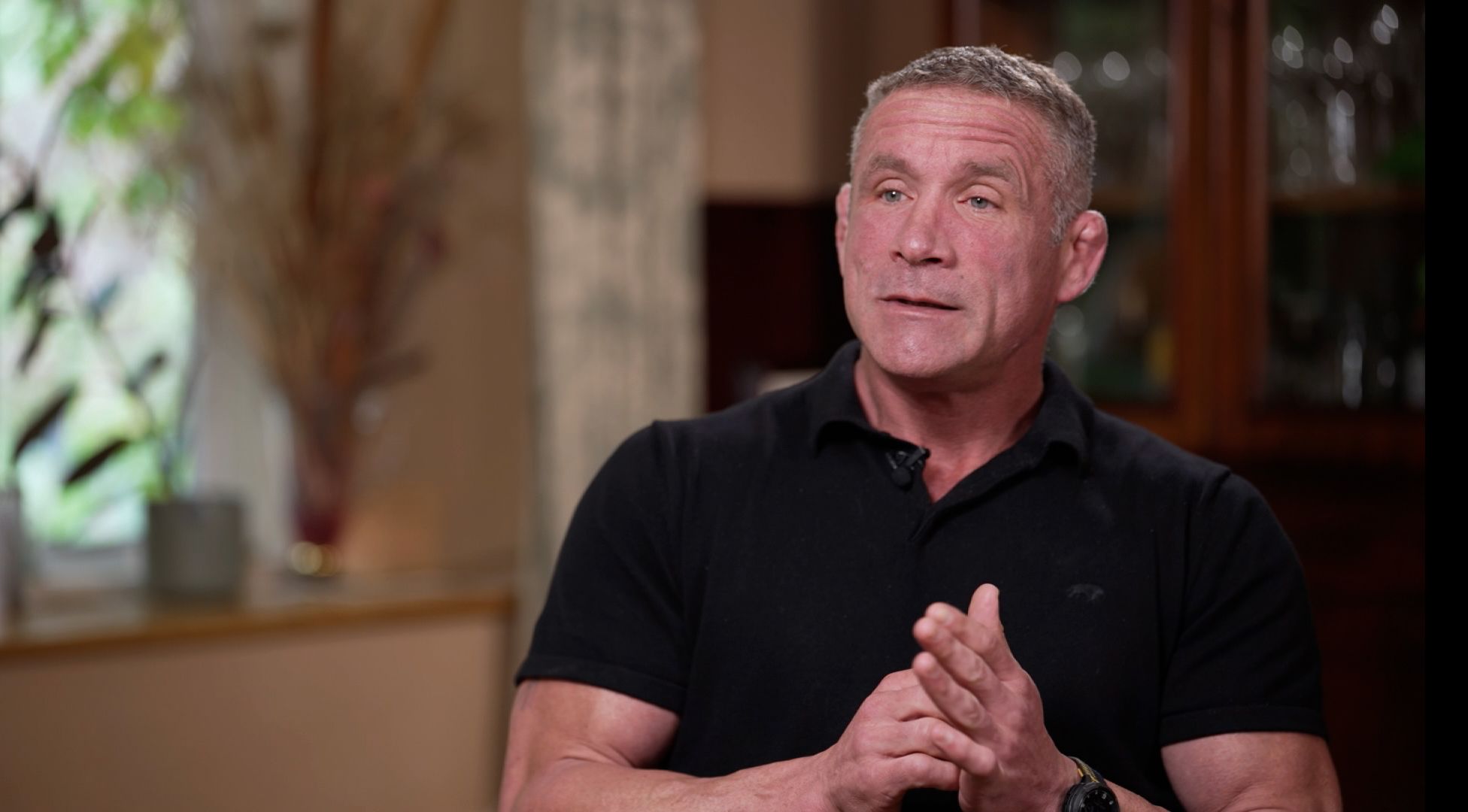
Vickery – who was a hulking, burly figure in his rugby days – admits that anger would initially take over when he struggled to remember simple things like names and places. He says his symptoms became more apparent to him “six or seven years ago.”
“It’s not those that you, kind of – people you met a long time ago. You’re talking family members and people pretty close to you,” he explains.
“You learn to get by and laugh about it [though]. I’ve moved into the space of, ‘What can I do to help myself?’”
There seems something cruel, however, about its impact being felt at the place that for so long was his favorite stage – the home of England rugby – Twickenham.
Sitting in the stands at England’s game against Australia recently, 50-year-old Vickery was forced to wear earplugs to drown out the noise and the overwhelming flood of emotion.
The man who was involved in one of his country’s greatest ever sporting memories reveals he burst into tears in the parking lot as he went home.
‘My sister would look after me’
Even as CNN Sports speaks to him in the quiet, controlled environment of an indoor interview setup, Vickery says tinnitus in his ears is ringing like crazy.
He lets out a humming noise to paint the picture of the sounds whirring around.
And then there’s the question of Vickery’s own mortality.
It’s a sobering moment when he acknowledges that there’s a chance his condition could deteriorate in the coming years, impacting those nearest and dearest to him.
“It’s difficult because you tend to not really to talk about it,” he says as his voice begins to crack.
“We do a little bit. My family are aware of it … I’ve got their support.”
He then takes a long pause, looking down at his hands brushing against each other as his eyes fill with tears.
“My sister would look after me which is amazing. My brother’s around. Mom’s still around,” he smiles, sits back and exhales.
“I’m very fortunate that I have a platform, but there are lots of people who are suffering.”
Landmark concussion lawsuit
Vickery is one of more than 1,100 players – across both codes of rugby (league and union) – who claim that repeated impacts sustained throughout their careers have led to conditions such as CTE, Parkinson’s and motor neuron disease.
They accuse World Rugby, the Rugby Football Union (RFU), the Welsh Rugby Union (WRU), the Rugby Football League (RFL) and others of failing in their duty of care to protect them from the risks of brain injury.
The governing bodies have all vigorously denied liability.
Though, the rugby legend holds no bitterness or malice regarding the situation he finds himself in.
“I would do it (again) because I would never not do anything to play rugby,” he affirms.
The legal process remains ongoing, but Vickery says there’s no winners or losers in it – nothing will change what he believes is his diagnosis. He maintains that it’s about accountability and integrity.
“There are people who know a lot more than they let on. All I want is just some honesty,” he tells CNN Sports. “I would love to just get to court and for people’s stories to be heard.
“Even if you win as a player, you get money, [but] it doesn’t change my diagnosis. It doesn’t take away from the problems.
“What it does do is give comfort for people who will need looking after.
“Silence isn’t a f**king defense. That I find very difficult to accept.”
Bodybuilding transformation
Vickery admits now that he found it very difficult to accept the end of his professional sporting career.
“The nerves, the sense of pride, the emotion, ‘I’m going to be sick,’ ‘Am I good enough? Am I not good enough?’ The grumbles of the stadia, people, walking down that tunnel, fireworks, the noise…” Vickery recalls in vivid detail about that famed 2003 World Cup final. “Wow.”
But inevitably that elation didn’t last forever.
“I spent 10 or 12 years pretending with my rugby. I didn’t really deal with finishing the rugby, locked it away, put it in a dark cupboard, shut the door,” he reflects.
“The mistake then for me is trying to find something to replace the irreplaceable.”
So instead of that, he’s somewhat unexpectedly – and sensationally – found bodybuilding.
Challenged by a former coach to perform at a show, Vickery details to CNN Sports how he underwent an 18-week preparation.
Though he had to follow a strict diet and performance plan, the purity of his new sport made him fall in love with the process.
“You’ll see it on Instagram someone who posts, ‘You can look like this in 12 weeks.’ No, you f**king can’t! No, you can’t. It takes a long time and a lot of effort,” he states.
“There’s no smoke and mirrors. You can’t hide behind anything. You’re on stage wearing nothing. Your physique is a reflection of the commitment that you’ve put in.”
Though competitors do actually wear something: a serious amount of fake tan and, in Vickery’s case, a shiny red Speedo. When the former England icon posted his pictures from a recent competition on social media, they almost broke the internet, such was the contrast from the images of his days playing rugby.
And while he might have personally seen plenty of room for improvement, he hopes others find it inspiring.
“It’s just a bit of inspiration. It’s not about making people bodybuilders,” Vickery jokes.
“We’ve never been so connected as a society but yet we’ve never been so disconnected.
“The messages I get from people talking about mental health or struggles means a lot.
“So if you can make a difference to someone’s life, just one, it’s worth it.”