Now on display in an exhibition at Foam in Amsterdam, Keerthana Kunnath’s bodybuilding series, titled Not What You Saw, is a graceful and strong portrayal of women athletes reframed in a rural setting ad bathed in the rich glow of the south Indian su
There is a specific kind of majesty that emanates from the protagonists of Keerthana Kunnath’s bodybuilding series, Not What You Saw. Typically bathed in the rich glow of the south Indian sun, the athletes appear graceful and assured as they make familiar shapes: raising their arms, flexing their biceps, turning a leg out, heads held high. Photographed away from their usual training spots and outside of the pageantry of contests, the women – they are all women – instead pose amid the lush greenery of Kerala, sometimes close to the sea or beside a lake, others simply in front of a building, the brightly painted walls standing in for a studio backdrop. The pictures are immediately striking and invariably layered, the image of the bodybuilder reframed in a rural setting.
“Obviously I knew that I wanted to photograph them,” says Kunnath of the women, who was born in the coastal city of Calicut and studied fashion design in New Delhi before moving to London for a masters in fashion photography. “I’m drawn to stories that challenge conventional ideas of beauty and womanhood, and I know the kind of struggles they have to go through [in order] to do something different.” Originally researching Kalari, a martial art from Kerala that originated in the 11th century CE – the photographer’s deepdive the result of an earlier creative block – when she came across the Instagram page of bodybuilder and former Miss Kerala Fitness champion Arathy Krishna, Kunnath was instantly captivated and suggested what she thought would be a one-off photo shoot. Several years later, with numerous portraits and multiple trips back to India, the community now feels like family she says, and indeed, the work has grown more intimate, emphasising the relationship between the bodybuilders’ practice and their wider stories.
With her first museum exhibition now open at Foam in Amsterdam, Kunnath reflects on how the project started, the ways it has transformed her own relationship with the body, and what the subsequent recognition has meant to the women at its core.

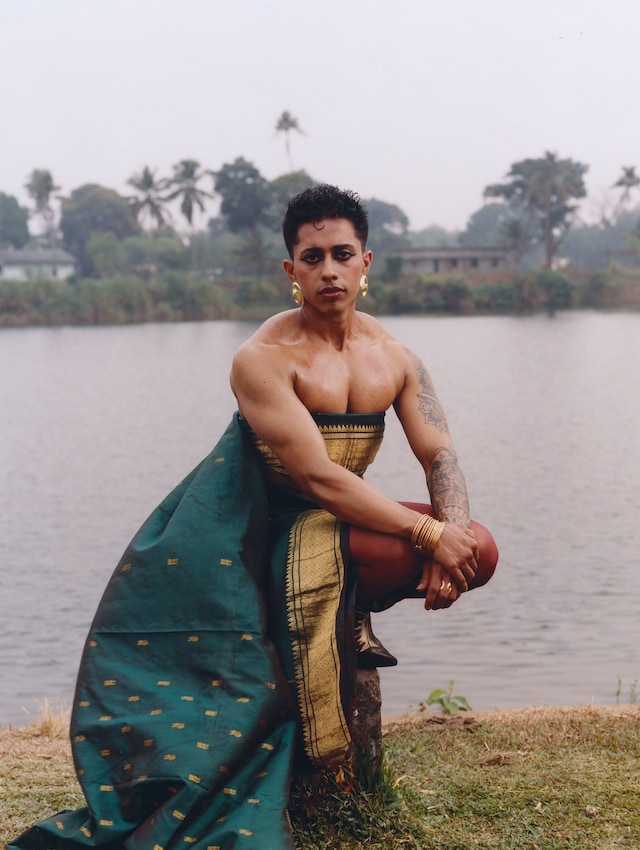
“I had a mentor who introduced me to photographers that explored vulnerable themes, and I automatically started questioning myself, talking about gender and sexuality in my personal practice, [topics] I struggled with growing up in India. When I came across one of these bodybuilders, I figured these women were making a conscious choice about who they wanted to become – they were actively reshaping how they are seen, in spite of backlash from the community around them. They stood their ground, carving a path for themselves.
“I knew I wanted to photograph them but we put that aside in the beginning, starting with long phone calls. They were keen to know about me too, and I told them I grew up in the region. The conversations kept going and I met more girls every time I came back to India. Their stories and the way they approached themselves was changing; their confidence was shifting and their bodies evolving. A lot of them are quite young and didn’t understand how revolutionary the things they were doing were, so it became a conversation. They opened up about financial struggles and being shamed by family for wearing bikinis and doing competitions. In Kerala, where we come from, even on the beach women wear saris.
“Clothing, in the beginning, was really important, and we pulled in a lot of cultural elements. Me and Elton [John, the stylist] were looking at old film posters and noting how women were presented and objectified. We wanted to borrow some of that visual language, but change the way it’s perceived. We were also interested in traditional garments and how they accentuated a muscular body. Elton really experimented, taking traditional silhouettes and making interesting drapes. There’s a certain regional stigma, if you’re wearing traditional clothing you are perceived as a good girl, but in modern clothing you might not be. We actually took many of those traditional aspects and did it our own way to create new meanings.

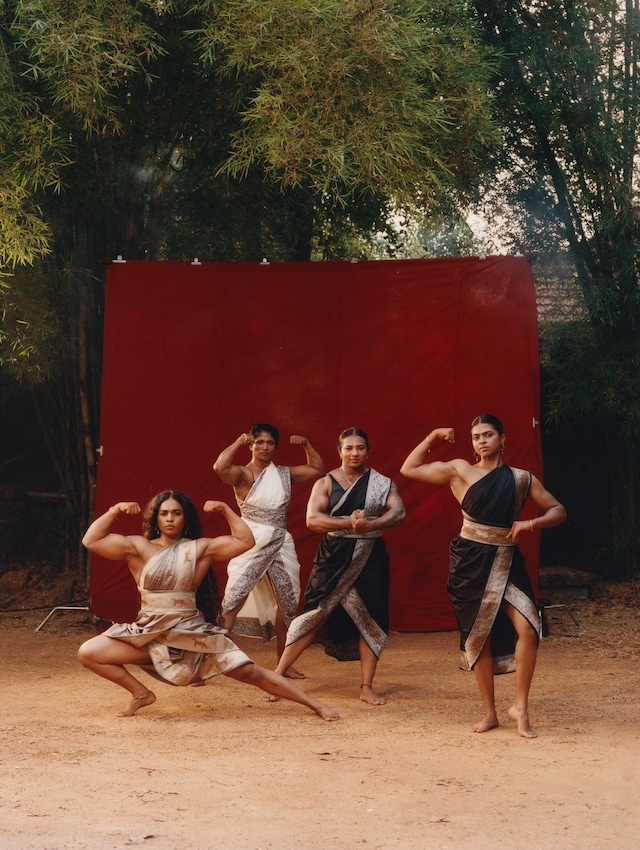
“The project has definitely affected my own relationship with femininity. Growing up I was really influenced by classical sculptures and Indian cinema, the idea of what a woman can be – not just historically but in ads and fashion, a certain archetype was embraced. Today too, there’s this whole influencer culture pushing a certain body type. Meeting these women, I feel like it’s okay to be evolving; everyone has a love-hate relationship with their body, it’s normal. Even these women weren’t completely happy with their bodies when we met.
“I remember one of the girls, who is always asked about femininity, saying that she used to be a tomboy wearing baggy clothes, and now she’s got a muscular body, which most people don’t consider feminine, she feels the most feminine she’s ever felt. I think we all have to figure out our own relationship with our body. People asked me if I would become a bodybuilder, but I don’t think I’ve got the tenacity. At the same time, it definitely has influenced my thinking.
“Most of the pictures at Foam are new works – I’ve been building this project for the last three years. There are scenes from their homes, we’re seeing more of these women and different aspects of their life, outside of bodybuilding. In one of the earlier pictures a woman is standing on a fish, she’s now a mother and over this time her body has changed, she’s going through all these different phases, so there’s pictures of that.


“Since the work has been exhibited in different countries, the women themselves feel a sense of pride. They never saw it as a story other women could feel connected to, or inspired by; they were not trying to make a point or do something groundbreaking, just trying to discover themselves and do their own thing. Everyone came to bodybuilding from a different situation, had their own personal journey. They were really proud of each other, when the series began to be celebrated.
“The response so far has been pretty great. My favourite is when mothers show their daughters the pictures, that’s always special. When I had a show in Kochi, women had really powerful responses, whereas some men got intimidated. And since the series has been published online we’ve had hateful comments from men, but that is kind of the point – questioning the whole idea of what a woman should be or what a woman can be. Overall, I’m happy with the way people are reacting, and I’m connected to these women. They’re like family, at this point, definitely more than a picture.”
Not What You Saw is at Foam, Amsterdam until 27 November 2026.