Dejana Vukadinović
BBC journalist
When Marko Janković first went to the gym two decades ago, he knew almost nothing about steroids and supplements.
He was a “skinny teenager” who shyly stepped into the gym with a friend.
He liked it.
The elders advised them on how to exercise properly and what was needed for their muscles to recover successfully.
At first, he practiced six days a week – before or after work.
However, two months later he ended up in the hospital due to a decline in his immunity.
He returned to training after a few years, and whenever he could, he would practice at home.
Then a friend brings him dianabol, a steroid – an artificial substitute for the male hormone testosterone created in the 1930s.
“They told me it was created by German scientists to turn a frail young man into a super soldier, ready for the battlefield, in eight weeks.”
“I knew nothing about its effects, I was taking 15 milligrams a day, and the recommendation is between 10 and 40,” Janković recalled to the BBC.
Two weeks later he felt pain in his stomach and liver.
“I thought it was the most affordable for bulking and I combined it with one 250-milligram ampule of testosterone weekly.”
“The male body produces three to 12 milligrams of testosterone per day – imagine what a 250-milligram amount can do,” says 33-year-old Jankovic.
He mostly bought the male sex hormone at the pharmacy, as it is sometimes prescribed for medical purposes and is available on prescription, but he could only find dianabol on the “black market”.
The last decades of the 20th century The negative health effects of steroids are increasingly being observed.
Then substances are developed that mimic the effects of steroids, and are advertised as their healthy substitute, without unwanted consequences.
One of them is a substance with a fancy name – selective androgen receptor modulators (SARMs).
It is used by both men and women who want bigger and stronger muscles, although it is banned in most countries.
There is currently no research to support claims that replacements like SARMs are healthy, warns Thomas O’Connor, a doctor with years of experience researching the use of these drugs.
However, they are available in just a few clicks in online stores.
“It’s terrible that their quality is not controlled.”
“Those who take them think there are no consequences because they gain muscle mass, they feel good, but in fact they destroy the liver, heart and kidneys in the long term,” he tells the BBC in Serbian.
From the laboratory to sports
The hormone testosterone was isolated in the 1930s and numerous synthetic androgens (male), or anabolic-androgenic steroids (AAS), were quickly developed.
Athletes soon discovered the effects of these hormones, and AAS began to be taken en masse in athletics and bodybuilding from the 1950s to the 1970s, the book says. History and epidemiology of anabolic androgens in athletes and non-athletes.
AAS users are not only professional athletes, but also young and middle-aged men who take these substances to improve their appearance.
Abuse, however, has become increasingly prominent in recent years, especially in Scandinavia, the United States, Brazil and the British Commonwealth countries, according to authors Gene Kanayama and Harrison Pope.
British National Health Service (NHS) points out a number of health risks that steroid use can cause: from infertility, strokes, depression to infertility.
While the number of users of artificial substances in these countries is growing, in some, such as China, South Korea and Japan, steroid use is less common due to cultural differences.
In these countries, not much importance is attached to a male muscular body, explain Gene Kanayama and Harrison Pop.
In Serbia 183 organizations are registered, clubs and centers that provide bodybuilding services.
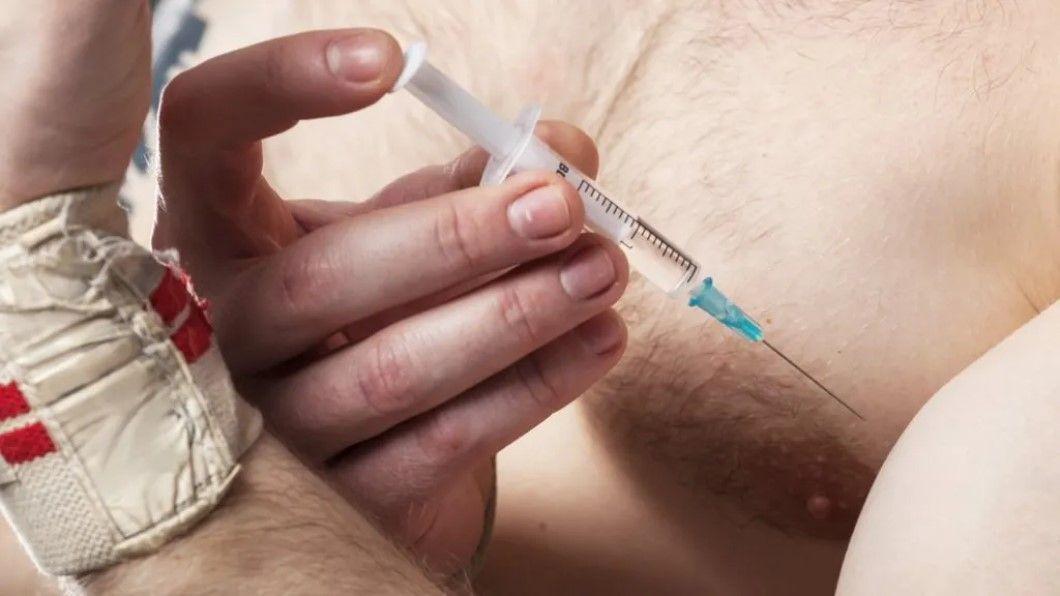
From liver damage to heart problems
Despite warnings from doctors that the use of steroids and their substitutes can be harmful to health, they remain very popular thanks to social media.
There are around a million, mostly men, in the UK who still take steroids, data is from the national anti-doping agency (UKAD).
“SARM users are led to believe that it will give them strength, mass, and make them more attractive.”
“They know that conventional steroids will cause their testosterone levels to drop and potentially cause problems.” with erectile dysfunction“, and SARM is like a guard,” explains Dr. O’Connor.
But in reality it is different.
Boston Lloyd was among the first bodybuilders to speak publicly about using various types of steroids and their substitutes to enhance performance.
He also took peptides, chains of amino acids, which are also marketed as being less harmful than steroids, but their use is for research purposes only.
In 2020, Lloyd’s kidneys began to fail due to taking peptides.
“I did this to myself as an idiotic experiment and it finally all caught up with me.”
“Do I regret anything? Absolutely not,” he wrote on Facebook at the time.
He died two years later.
In addition to kidney problems, he had a thickening of the heart muscle and an enlarged liver.
Arnold Hugh, a 21-year-old bodybuilder from Texas, finds that peptides and SARMs make him anxious and have frequent mood swings, but he continues to use them.
“Nothing serious for me, I know what I’m doing,” he said in the documentary. Separation lines.
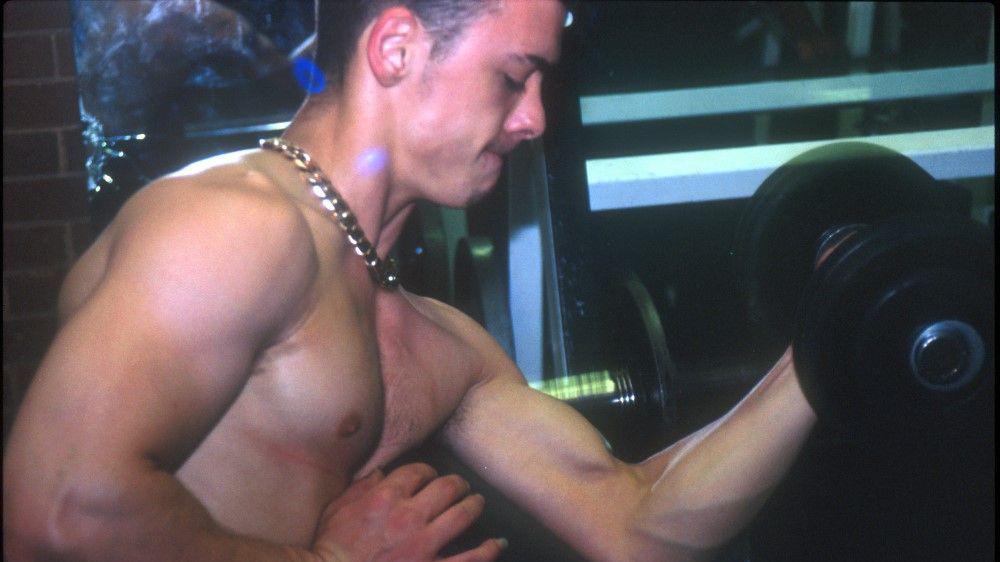
SARMs are only a fraction of the bodybuilding industry and are also taken by women, even though the bottle label says it is “for research purposes only” and “not for human use,” Dr. O’Connor points out.
He has been involved in men’s health, testosterone replacement therapy, and anabolic steroid recovery for more than two decades, and has written a book about it. America on steroids.
SARM peptides on on the list of banned substances in Serbia, but they can be purchased via websites specializing in supplements.
They are not registered in Serbia, they are still considered experimental substances and are the subject of research, according to the Agency for Medicines and Medical Devices.
“They are being investigated in the pharmacological treatment of osteoporosis and muscle loss, but they have not been proven to be safe and effective for human use,” they added in a written response to the BBC in Serbian.
Not everyone uses them though.
For the past 15 years, Nenad Stepić has been regularly lifting weights, doing pull-ups, and trying to stay in shape.
At no point did he want to take any artificial substance despite numerous offers.
“I don’t need it, I go to the gym because I enjoy it and I love the feeling after a hard workout.”
“I’m also noticing the results – I’ve gained muscle mass, my body has hardened, and I’ve maintained my health – that’s enough for me,” he tells BBC Serbian.
Breakfast of champions? Still, no
Marko Janković also returned to regular training, but with greater knowledge.
After his experience with Dianabol, he never again resorted to steroids or their substitutes, but he knows people in his wider environment who have.
“Among the more popular ones is SARM MK667 – it affects growth hormone, increases appetite, but also has side effects, such as heart problems.”
“There’s also the problem of bigorexia, where you never feel muscular enough.”
“This could be one of the potential reasons why many, despite the risks, continue to take insufficiently researched substances to the detriment of their health,” he believes.
In addition to spare equipment, his gym backpack also contains a banana, protein, amino acids and of course – water.
“I learned that I need to take something to protect my liver, not some artificial preparation. In addition, I regularly monitor my hormone status and thus maintain my health.”
“I’m aware of how long a workout cycle lasts, how much amino acids and protein I need to consume daily, and that all of that is much more important than Dianabol – breakfast of champions, as they call it colloquially,” he says.
BBC is in Serbian from now on and on YouTube, follow us HERE.
Follow us on Facebook, Twitter, Instagram i Viber. If you have a topic suggestion for us, please contact bbcnasrpskom@bbc.co.uk

News