Dr. Mike Israetel of RP Strength recently outlined his ultimate approach to building an aesthetic physique—and the strategy might surprise traditional bodybuilders.
While many lifters chase overall mass, Israetel argues that true aesthetics come from strategic prioritization.
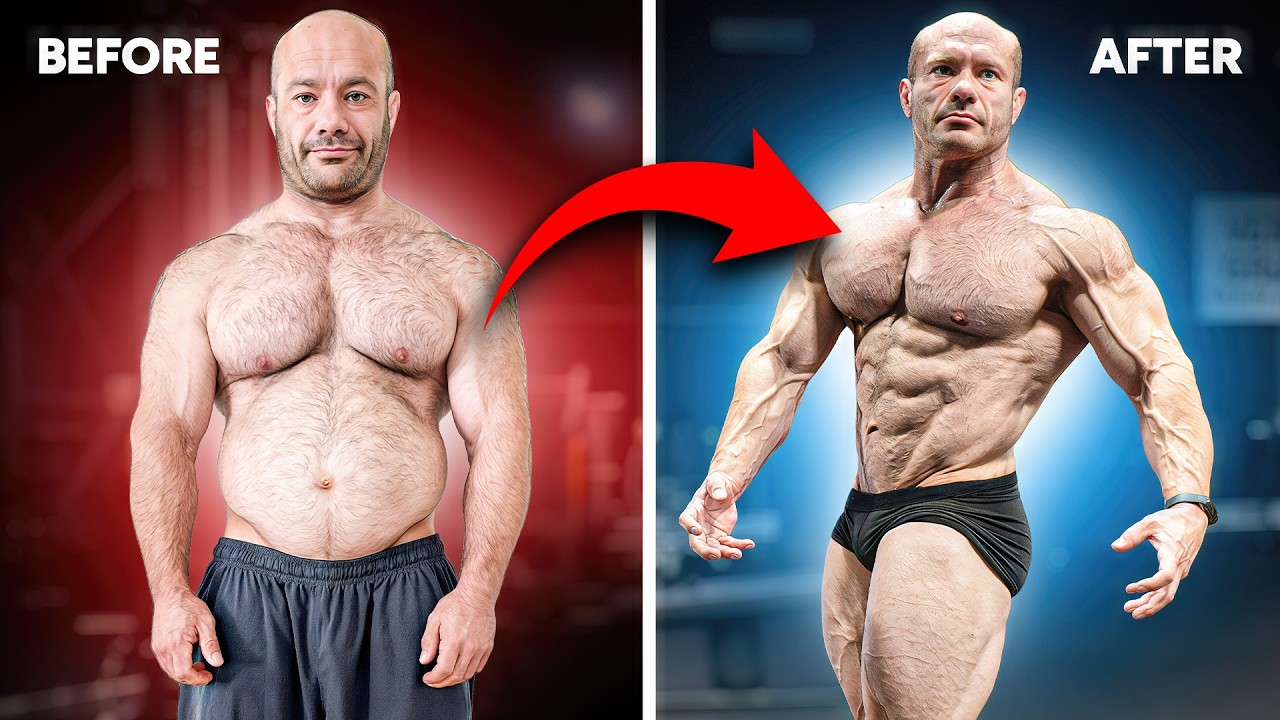
His four-day training program focuses relentlessly on the V-taper, emphasizing upper chest, lat width, capped shoulders, and proportional arms while deliberately de-emphasizing certain muscle groups.
The result? A blueprint for developing the timeless physique that defined bodybuilding’s golden era.
The Universal Elements of Aesthetic Physiques
Israetel acknowledges that aesthetics involve personal preference, but certain characteristics appear consistently across history’s most admired physiques. Arnold Schwarzenegger, Mike Mentzer, Lee Haney, and Keon Pearson all showcased dramatically different builds, yet shared common traits.
The V-taper is critical to that as are big shoulders and arms. And if you think about the most aesthetic physiques of all time, Arnold’s physique, Mike Mentzer’s physique, Lee Haney’s physique, Keon Pearson’s physique, they are defined by many differences, but all of them have huge V-tapers, massive shoulders, and arms.
These universal priorities form the foundation of Israetel’s training approach.
Five Key Priorities for Maximum Aesthetics
Rather than pursuing balanced development, Israetel’s program deliberately overemphasizes specific areas while minimizing others.
Upper Chest Dominance
Upper pectoral development creates visual “pop” and defines the top portion of the V-taper from frontal views. Israetel prioritizes incline pressing movements over flat bench variations throughout the program.
Lat Width Over Back Thickness
Back width—not thickness—creates the dramatic V-taper that defines aesthetic physiques. The program emphasizes vertical pulling movements like pull-ups and pulldowns while notably excluding rowing exercises.
Massive Side Delts
Shoulder width amplifies the V-taper effect and contributes to overall aesthetic appeal. Israetel programs high-volume lateral raise variations twice weekly.
There is a physique where the side delts are too big, but I can’t think of it now and I don’t think it’s real.
Proportional Arm Development
Both biceps and triceps receive substantial direct work, with triceps getting additional stimulus from pressing movements. Forearm training completes arm development, ensuring visual balance.
Narrow Waist Through Leanness
Israetel emphasizes that waist size depends primarily on genetics and body fat percentage rather than training. Maintaining lower body fat percentages naturally reduces waist circumference, enhancing the V-taper illusion.
The Four-Day Training Split
The program utilizes strategic frequency to maximize growth in priority areas while allowing adequate recovery.
Day One: Back and Chest (Pull-Push)
This session begins with vertical pulling before transitioning to incline pressing:
- Pull-ups: 2-3 sets with full range of motion and complete stretch
- Lat pulldowns: Multiple sets using various grip positions
- Incline barbell press: Regular grip, maintaining arch and chest position
- Incline dumbbell press: Completing the upper chest volume
Starting with pulling movements ensures back training receives maximum effort and energy.
Day Two: Shoulders and Arms
This session targets smaller muscle groups that recover faster than chest and back:
- Barbell skull crushers: 3-4 sets for horizontal tricep emphasis
- Overhead EZ-bar extensions: Targeting the long head of triceps
- Dumbbell lateral raises: 3-4 sets
- Cable lateral raises: 3-4 additional sets
- Barbell bicep curls: 4-5 sets or myo-rep match system
- Standing barbell wrist curls: Marathon set to 50-60 total reps
The double dose of lateral raises reflects Israetel’s emphasis on shoulder width as non-negotiable for aesthetics.
Day Three: Chest and Back (Push-Pull)
Exercise order reverses from Day One, starting with pressing movements:
- Incline wide-grip barbell press: 2-3 sets with pause at bottom
- Machine incline press: 2-3 sets for additional volume
- Underhand lat pulldowns: Emphasizing bicep involvement
- Straight-arm lat pulldowns (lat prayers): Lat isolation movement
Notably, this session includes zero rowing movements, maintaining exclusive focus on vertical pulling for lat width.
Day Four: Arms and Shoulders
The final session flips the priority order from Day Two:
- EZ-bar curls: 3-4 sets of 5-10 or 10-15 reps
- Cable curls: 3-4 sets of higher reps (10-20)
- Machine lateral raises: 3-4 sets
- Seated dumbbell lateral raises: 3-4 sets
- Inverted skull crushers: Giant set for 50-60 total reps
- Bar push-ups: Forearm-focused giant set
Starting with biceps ensures arm training receives maximum effort when fatigue is lowest.
Why Arms Get Trained Four Times Weekly
While the split appears to train arms directly only twice weekly, Israetel explains that compound movements provide additional stimulus.
Research has shown that you do grow muscle and stimulate muscle growth from compound movements designed for one muscle if another muscle is involved. Bench presses do grow your triceps and they will for us. And rows and pull downs do grow your biceps as well.
Vertical pulling stimulates biceps growth. Incline pressing stimulates triceps development. Combined with two dedicated arm sessions, this creates four weekly growth opportunities.
Smaller muscle groups like biceps, triceps, and shoulders recover faster than larger muscles, allowing higher training frequencies without overtraining.
Volume Progression and Exercise Variation
Israetel emphasizes that specific exercise selections serve as examples rather than rigid prescriptions. Movement patterns matter more than individual exercises.
Initial training volumes start conservatively at 3-4 sets per exercise. As recovery capacity improves, volume increases progressively to 5-6 sets or higher.
I don’t even like training shoulders. I hate it, but I want bigger shoulders. So, I do it all the goddamn time. They recover a ton. Potentially on this program, you’re looking at more than 20 sets of laterals per week.
Shoulder training can eventually reach 25-40 weekly sets as adaptation occurs. Higher volumes become manageable as muscles develop greater recovery capacity.
Exercise rotation every few months prevents accommodation while maintaining movement pattern consistency. Vertical pulls might rotate between pull-ups, pulldowns, and assisted variations while preserving the pulling pattern.
Nutrition Strategy for Aesthetic Development
Training represents only half the aesthetic equation. Israetel recommends strategic gaining and cutting phases to maximize muscle growth while minimizing fat accumulation.
Gaining Phase Protocol:
- 16-week gaining phase at 0.5 pounds weekly (8 pounds total gain)
- 4-week maintenance phase focusing on strength training
- 8-week fat loss phase at 1 pound weekly (8 pounds total loss)
This approach returns lifters to identical body weight but with improved body composition—more muscle, less fat.
For higher body fat individuals, Israetel suggests modified ratios: 12 weeks gaining (6 pounds) followed by 8 weeks cutting (8 pounds), creating net fat loss while building muscle.
Maintaining high protein intake throughout all phases preserves muscle tissue during cuts and supports growth during gains.
The Strategic Omission of Leg Training
Throughout his presentation, Israetel humorously acknowledges minimal leg emphasis in aesthetic-focused training. While he jokingly demonstrates “leg training” with exaggerated brevity, the underlying point reflects reality.
Aesthetic physiques historically emphasize upper body development. Leg training, while valuable for overall health and function, doesn’t contribute to V-taper or visual width.
This doesn’t mean abandoning leg training entirely—balanced development supports long-term health—but aesthetic priorities naturally emphasize upper body musculature.
Timeline Expectations and Patience
Israetel stresses realistic expectations regarding muscle growth timelines.
Muscle takes time to grow. It’s going to take months to add an appreciable amount of size to your shoulders, your arms, your chest, and your lats. Be patient.
Meaningful aesthetic transformation requires 12-18 months of consistent training and nutrition. Multiple gaining-cutting cycles compound improvements, progressively revealing muscular development while reducing body fat.
Visual changes accelerate as leanness increases. Lower body fat percentages reveal muscle definition, creating dramatic aesthetic improvements even without additional muscle growth.
Practical Implementation Tips
Rep Ranges: Most exercises accommodate 5-25 reps per set depending on movement and position in workout. Compound movements early in sessions use lower reps (5-10), while isolation movements later use higher reps (15-25).
Myo-Rep Matching: After reaching near-failure on a first set, rest briefly (10-20 seconds) and perform additional sets to match the first set’s rep count. This maximizes volume efficiency.
Marathon Sets: For forearms and occasionally triceps, perform one extended set with brief rests (5-10 seconds) until reaching 50-60 total reps. Increase by 5-10 reps weekly.
Exercise Technique: All movements emphasize full range of motion with controlled eccentric (lowering) phases and complete stretches at end ranges.
Israetel’s aesthetic physique program represents strategic muscle building rather than balanced development. By dramatically emphasizing upper chest, lat width, shoulders, and arms while maintaining aggressive leanness through cycling nutrition phases, lifters can develop the timeless V-taper physique that defined bodybuilding’s golden era.
The approach requires patience, consistency, and willingness to prioritize specific muscle groups over others—but for those seeking classic aesthetic proportions, this targeted strategy offers a proven roadmap.